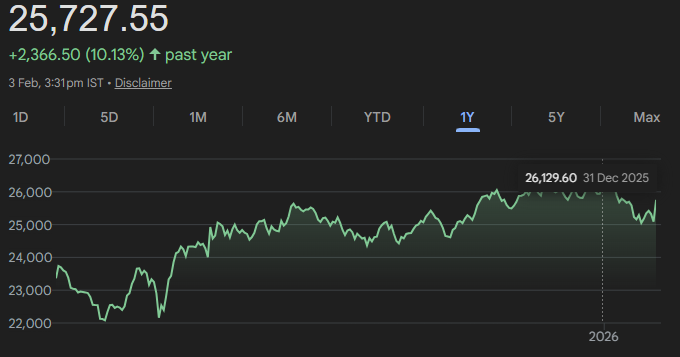
The performance of Nifty 50 is quite decent vis a vis 2025 and it has generated a return of close ~10% and many of the investors might be in a dilemma to buy the stocks for better returns as there was an uncertainty wrt trade deal between India and the US. But yesterday, the US announced a trade between India and the US, which is expected to give a push to Indian markets.
In such a scenario one should be able to identify the right stocks or theme to invest in to generate a good return. There are ways one can identify stocks which are fundamentally strong stocks yet undervalued even in 2026.
The list below shows 1 stock(s) which is (are) identified using the below filters, the count may change as and when there is any new addition or deletion of stocks in the list.
The generated list is not a recommendation to buy, rather it is shown for learning purposes and readers are advised to do thorough research before investing in stocks or any other securities.
The list is prepared after considering the following parameters, which are as follows:-
Sales growth is more than 15%
OPM is more than 20%
Profit after tax is more than Rs 12 crores
Cash at the end of last year is greater than cash at the end of preceding year
Return on Equity is Greater than 15
Return on Capital employed is more than 18%
Cash Return On Invested Capital is more than 20
Price to Sales ratio is less than 1.5
Price to earning is less than 10
Price to cash flow is less than 8
Criteria | What it means in simple words |
|---|---|
Sales growth is more than 15% | The company’s business is growing at a healthy pace. More sales mean more demand for its products or services and better future potential. |
OPM (Operating Profit Margin) is more than 20% | The company earns at least ₹20 as operating profit from every ₹100 of sales. This shows good cost control and strong pricing power. |
Profit after tax is more than ₹12 crores | The company is financially stable and already profitable. It is not too small or struggling to survive. |
Cash at the end of last year is greater than cash at the end of preceding year | The company’s cash balance is increasing year after year, which shows strong cash generation and good financial discipline. |
Return on Equity is greater than 15% | The company is using shareholders’ money efficiently to generate profits and create value for investors. |
Return on Capital Employed is more than 18% | The company is using both its own and borrowed money effectively to run the business, showing strong operational efficiency. |
Cash Return on Invested Capital is more than 20% | The company is generating real cash from the capital invested in it, which proves the quality of its earnings. |
Price to Sales ratio is less than 1.5 | The stock price is low compared to its sales. You are paying less for every rupee of revenue the company earns. |
Price to Earnings is less than 10 | The stock is trading at a low price compared to its profits, giving investors a margin of safety. |
Price to Cash Flow is less than 8 | The company has strong cash flows but its stock price is still reasonable, indicating possible undervaluation. |